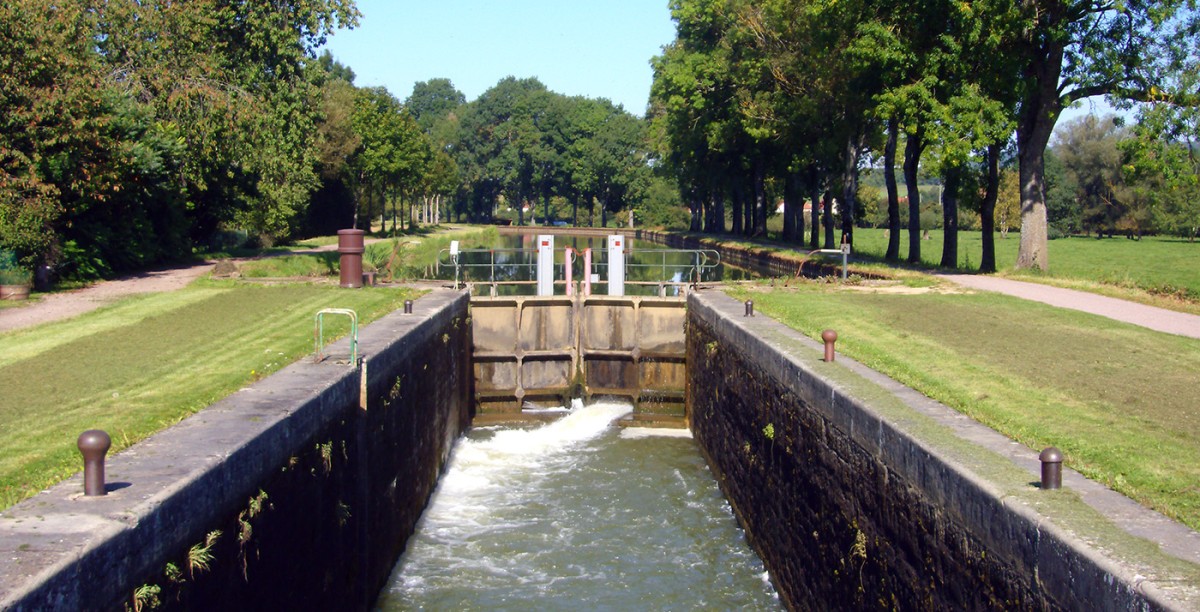
How a canal lock works
Learn how boats go up and down a canal lock
Taking a barge or boat through a canal lock
This interactive animation shows the different stages of locking a boat through a canal lock.
Precautions when locking through with a boat
Before locking through, please learn and respect the following rules.
- A lock keeper must be present when you lock through.
- Do not try to operate a lock if you are unsure of what you are doing.
- Survey children at all times.
- DO NOT RUN on, near or around the locks.
- Be careful using the sluice gate handles.
- Always put the safety lock or chain on the lock doors after you have finished opening or closing the lock.
- Survey your ropes; they should not be too slack or too tight.
- It is very easy to empty the "canal pound" of water and flood the one below.
Locking through a barge going upstream
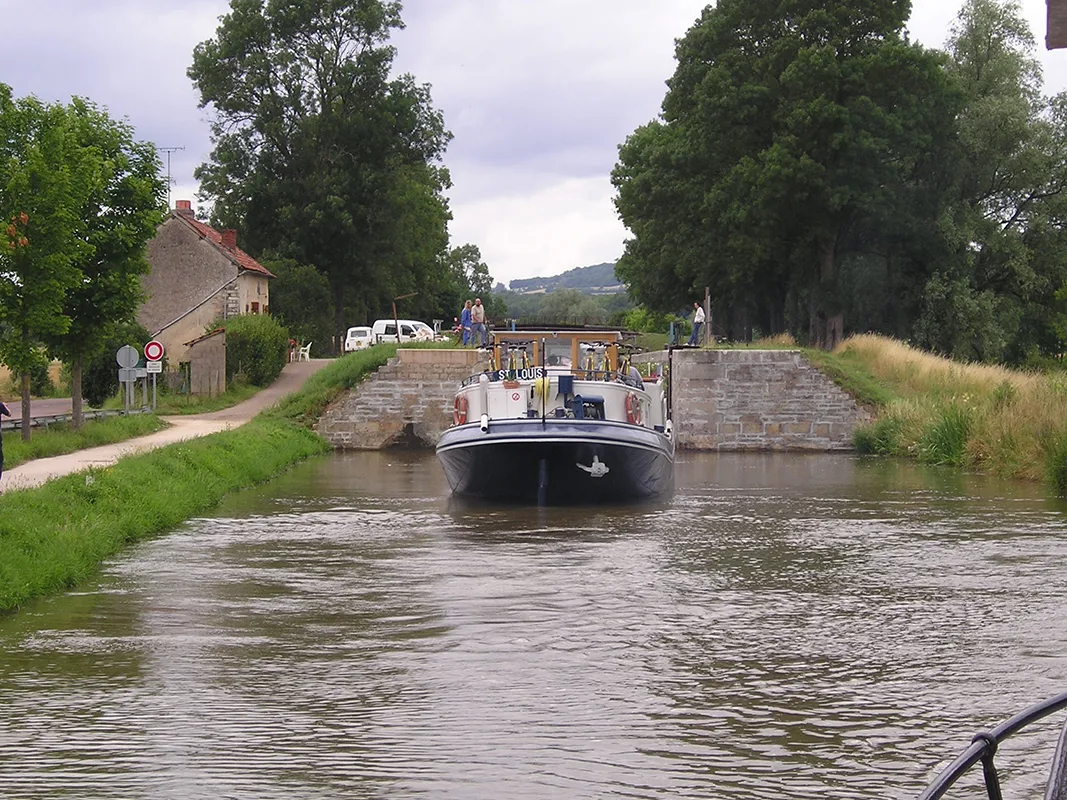
- The lock must be empty, with the lower doors open, in the same position as the end of the procedure for when a barge is coming downstream.
- The lock keeper will lower the sluice gates to cut off the water current being provided, reducing turbulence as you enter the lock.
- The barge will line up and enter the lock slowly.
- The deckhand will stop the barge advancing with a rope and bollards, generally on a bow bollard, stopping the barge short of the "radier".
- The barge is securely moored in the lock by a lead rope.
- The lock keeper closes the downstream doors (it helps to speed up the procedure by assisting him).
- The downstream sluice gates are closed.
- The upstream sluice gates are opened slowly, allowing water to enter the lock and fill up.
- The bargee and deck hand constantly verify the barge's position as it rises, as it is often necessary to adjust and tighten the ropes to keep the barge in its correct place.
- Once the water level in the lock reaches the level of the canal above, the pressure, which was naturally keeping the upstream doors closed, is released. It then becomes possible to open the doors, which should be attached, once opened.
- The barge ropes can be released, and the barge can slowly exit the lock. It is polite and safer not to exit the lock too quickly, as the turbulence caused by the propeller can create a wave movement which "slams" the door.
- The lock is now in a position to accept a barge coming downstream.
Locking through a barge going downstream
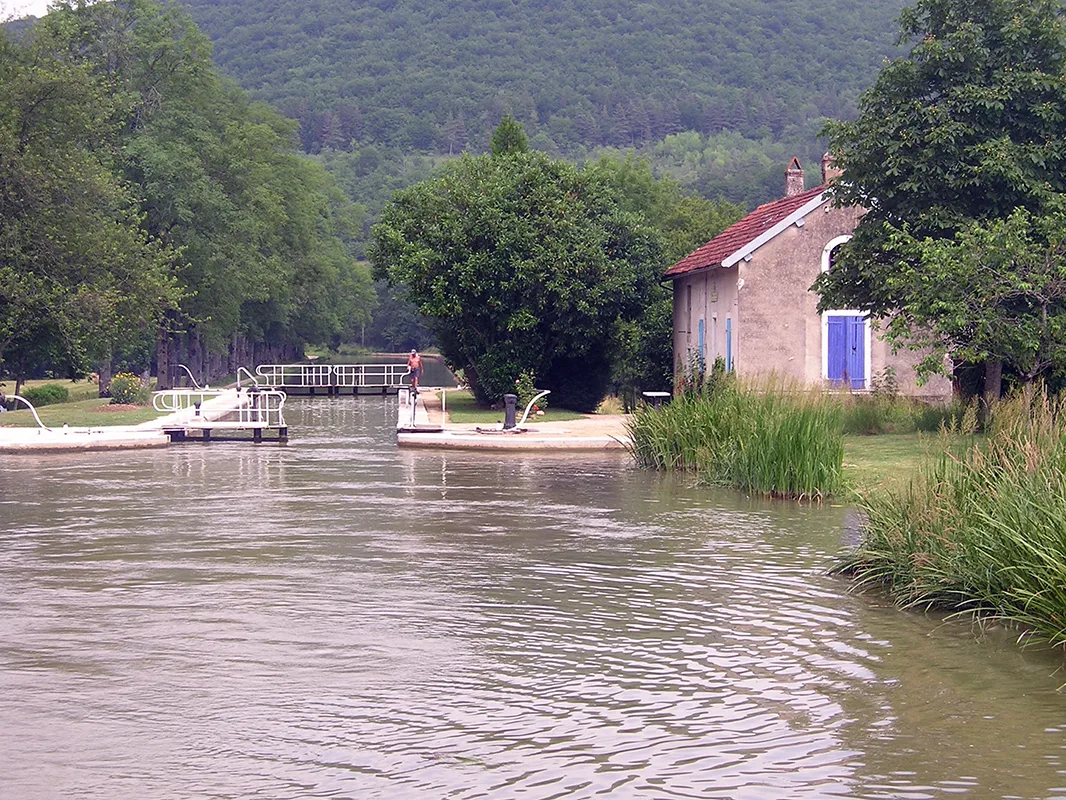
- The lock must be prepared and full of water; the upstream doors open as indicated in paragraph 10 for barges going upstream.
- The lock keeper will indicate when the bargee can safely enter the lock.
- The barge will enter the lock slowly, and the deckhand will stop the barge from advancing using a rope and bollards, generally on a bow bollard.
- The lock keeper closes the upstream doors (it helps to speed up the procedure with one of your crew assisting in closing the opposite door).
- The upstream sluice gates are closed.
- The downstream sluice gates are opened slowly, allowing water to exit the lock into the canal pound below. The barge will slowly descend.
- The bargee and deck hand constantly verify the barge's position as it descends, as it is often necessary to adjust and slacken the ropes to keep the barge in its correct place.
- Once the water level in the lock reaches the level of the canal below, the water pressure that naturally kept the downstream doors sealed can be released.
- The ropes can be released, and the barge can slowly exit the lock. It is polite and safer not to exit the lock too quickly, as the turbulence caused by the propeller can create a wave movement which "slams" the doors.
- The lock is now in position and ready to accept a barge going upstream.